

Atty. Hue Jyro U. Go and Atty. Micah Lorelle P. De Guzman, together with Atty. Jake O. Leoncini through counsel Atty. Redemberto R. Villanueva of RRV Legal Consultancy Firm and Go & De Guzman Law Offices, filed before the Supreme Court of the Philippines last April 20, 2026, a Petition for Certiorari and Prohibition, with an urgent prayer for a Temporary Restraining Order and Preliminary Injunction.
The petition challenges the HOR Committee on Justice and the House of Representatives in relation to the ongoing impeachment proceedings against Vice President Sara Duterte, specifically targeting the third and fourth impeachment complaints.

Figure 1. View of the Supreme Court of the Philippines. From theSupreme Court of the Philippines, (https://sc.judiciary.gov.ph/about-the-supreme-court-of-the-philippines/).
Importantly, the petition does not ask the Court to rule on the truth or falsity of the impeachment allegations. Instead, it highlights the constitutional issue on whether the House remained within its limited authority during the initiation stage of impeachment, and whether it exceeded those limits.
The core of the petition is the claim that the House Committee on Justice gravely abused its discretion by going over and beyond its constitutionally defined role. Under Article XI of the 1987 Constitution, the House, during the initiation stage, is only tasked to determine whether an impeachment complaint is sufficient in form, substance, and grounds as filed.
The petitioners emphasize that this role is strictly preliminary and threshold in nature, and does not include investigation or evidence-building.
However, the Committee did not limit itself to this function. Supposedly, subpoenas were still issued. The committee also compelled the production of documents and testimonies not originally attached to the impeachment complaints filed from 2024-2025. These include Statements of Assets, Liabilities, and Net Worth (SALNs) spanning several years, National Bureau of Investigation records, affidavits and testimonies of private individuals, and Anti-Money Laundering Council and bank-related records, including those involving the Vice President’s spouse. For the petitioners, these acts show that the Committee was not simply evaluating the sufficiency of the complaints, but was instead attempting to supplement or build the evidentiary basis of the case without fair play.
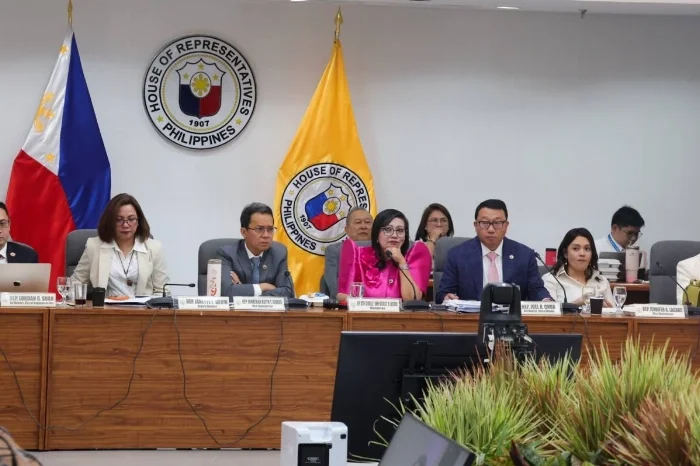
Figure 2. The House of Representatives Committee on Justice resumes its impeachment hearing against Vice President Sara Duterte in Quezon City on April 22, 2026. From The Manila Times, by J. Verdote, 2026, (https://www.manilatimes.net/2026/04/23/news/sc-intervention-sought-over-expanded-house-impeach-proceedings/2326636).
The petition describes these actions as a “fishing expedition,” arguing that subpoenas in impeachment proceedings must still follow constitutional standards of relevance, materiality, and specificity. It also maintains that sufficiency should be based only on what is stated in the complaints and their attachments at the time they are filed, not on evidence later gathered by the Committee.
A key concern in the petition is that expanding the inquiry blurs the constitutional boundary between the start of the process and the stage where the case is decided. It warns that if the House is allowed to gather and rely on new evidence at the sufficiency stage, the process effectively shifts from a simple screening into a full investigation, which the Constitution does not permit at that stage. The petition also invokes due process considerations, stressing that although impeachment is political in character, it is still subject to fundamental standards of fairness and to the proper legal process. It argues that even when the House uses compulsory tools like subpoenas, it must still follow constitutional rules and limits.
Based on these grounds, the petition argues that the House Committee committed grave abuse of discretion, making its actions subject to review by the Supreme Court. It also seeks urgent injunctive relief to prevent irreparable harm, particularly from the disclosure of sensitive information, and raises concerns about fairness due to alleged signs of prejudgment during the proceedings.
Ultimately, the petition asks the Supreme Court to issue a TRO or preliminary injunction, nullify the Committee’s findings and subpoenas, and prohibit further proceedings based on the challenged complaints. At its core, it calls on the Court to define the limits of the House’s authority and determine whether the constitutional boundary between simple screening and active investigation at the initiation stage has been crossed.